- Birmingham Farmers Market, 660 N. Old Woodward Ave., Parking Lot No. 6 N. Old Woodward Ave., north of Harmon, opening with extended hours this year, 9 a.m. to 3 p.m., Sunday, May 5, 248-530-1200, www.birminghamfarmersmarket.org.
- Farmington Farmers and Artisans Market. Because of construction on Grove Street, the market will be relocated to a temporary location on Orchard Street at Farmington Road, behind Fitness 19. Enter off Farmington Road. Open 9 a.m. to 2 p.m. Saturdays, May 4- Nov. 9, 248-473-7276, ext. 13, downtownfarmington.org/Downtown-Events/Whats-Happening/Farmers-Artisans-Market.
- Milford Farmers Market, on East Liberty Street between South Main Street and Union Street, open 3 to 8 p.m. Thursdays, May 9 to Oct. 24, 248-496-7056, www.milfordfarmersmarket.org.
- Northville Downs Track, Seven Mile and Sheldon roads, open 8 a.m. to 3 p.m. Thursdays, May 2-Oct. 31, 248-349-7640, www.northville.org/Events_Calendar/Content/Farmers_Market.
- Oakland County Farmers Market, 2350 Pontiac Lake Road, Waterford Township, open 6:30 a.m. to 2 p.m. Tuesdays and Thursdays, May to December and Saturdays year-round.
- Rochester Farmers Market, East Third and Water Street, open 8 a.m. to 1 p.m. Saturdays, May 4-Oct. 26, 248-656-0060, downtownrochestermi.com/events/farmers-market.
- Royal Oak Farmers Market, 316 E. 11 Mile, open 7 a.m. to 1 p.m. Fridays and Saturdays, May to December, 248-246-3276, http://www.ci.royal-oak.mi.us/portal/community-links/farmers-market. Open all year.
- Walled Lake Farmers Market, 1499 E. W. Maple, Walled Lake, open 7 a.m. to 1 p.m. Wednesdays, May through October, 248-926-9004, local-farmers-markets.com/market/2527/walled-lake/walled-lake-farmers-market.
Tuesday, April 30, 2013
Several farmers markets to open in May
April showers bring May flowers and farmers markets. Several markets
in the county are opening up and/or extending hours, offering fresh
flowers, transplants and other items. Here’s a list of markets that are
opening in May:

Sunday, April 28, 2013
Plant and seed swap to be hosted in Farmington Hills
The Farmington Hills annual plant and seed swap plus perennial
plant sale is 8:30 to 10:30 a.m. Saturday, May 11 at Heritage Park Visitor’s
Center parking lot, off Farmington Road between 10 and 11 Mile Roads. Every
year, gardeners gather to swap plants from their gardens with others. Attendees
are advised to bring gloves, wagons and plants and seeds to exchange. The
Beautification Commission, garden club members and master gardeners will be on
hand to answer questions and provide refreshments. For more information, call
Charmaine Kettler-Schmult at 248-871-2543.
Thursday, April 25, 2013
Let the worm turn... the soil
Worms are very useful in gardens and compost. In our yard, we find worms under logs and rocks and junk and move them to the garden or our compost barrel. It should be a good year for worms due to the massive amount of rain we've had.
1. To start a worm farm, get a wooden container that has holes. Small holes can be drilled into the container, not big enough for escapees. Plastic containers aren't a good choice because they keep the farm too wet. You also need a lid to keep the rain out.
1. To start a worm farm, get a wooden container that has holes. Small holes can be drilled into the container, not big enough for escapees. Plastic containers aren't a good choice because they keep the farm too wet. You also need a lid to keep the rain out.
2. Add bedding material like dead plants, leaves and/or newspaper clippings and some soil.
3. Add green material like household fruit and vegetable scraps and egg shells.
4. Just add worms. You can dig them up in your yard. (A great place to find worms is under dead wood in moist areas. You can also buy them at various places. I saw Gurney's is selling them in their garden catalog.
5. Periodically, add more bedding material and scraps.
The article below tells all about worm composting.
http://www.professorshouse.com/Your-Home/Gardening-Plants/General/Articles/What-Do-Worms-Eat/
Monday, April 22, 2013
Michigan Backyard Farms brings fresh to 'your backyard'
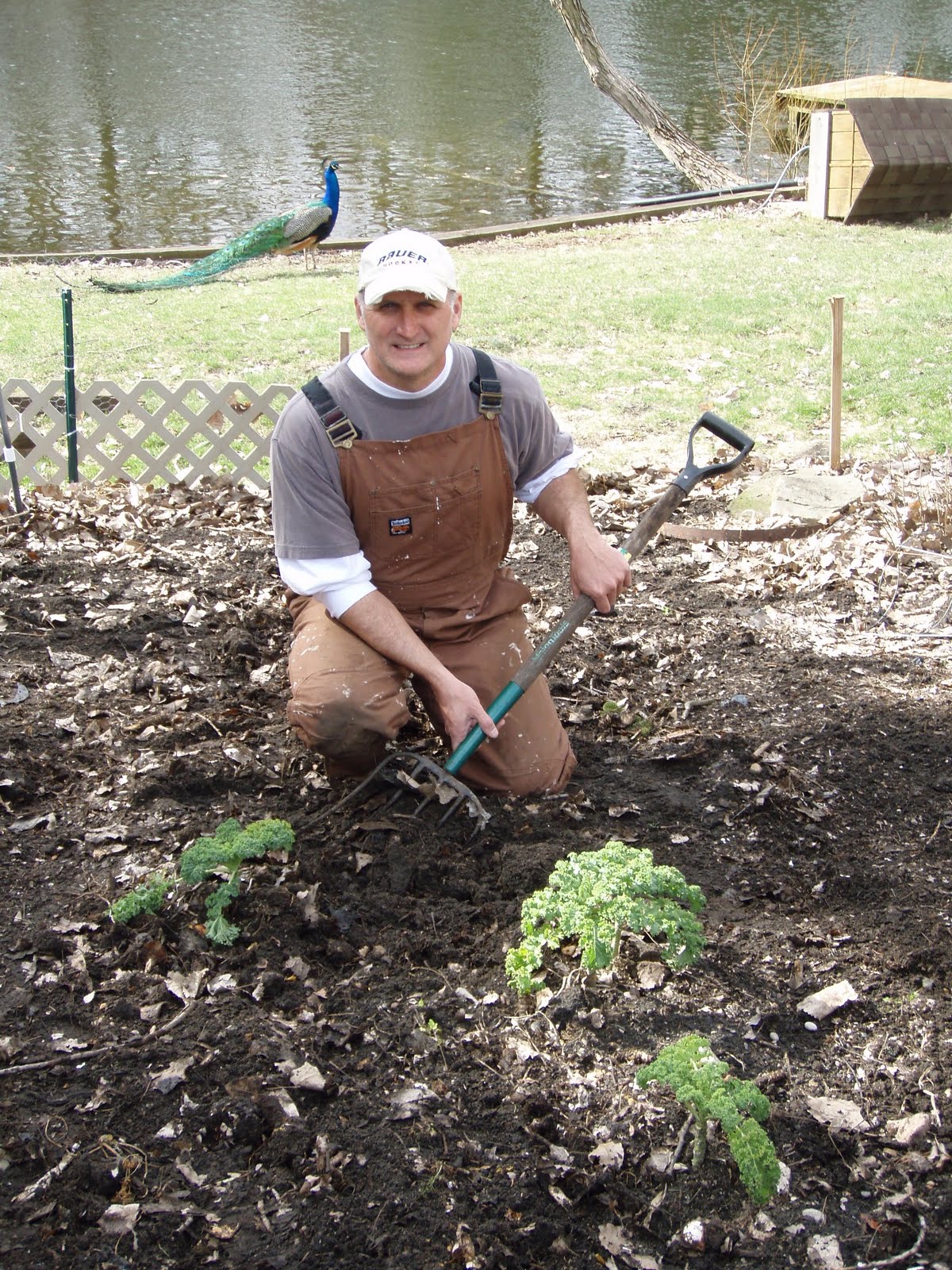 |
| Jerry Holcomb |
He started the program to serve a growing demand for fresh and local produce. Community Supported Agriculture is where farmers sell shares of their projected garden harvest.
Holcomb also offers the option to tend shareholders’ own backyard gardens.
He just planted kale, spinach, three kinds of lettuce, arugula and radish.
Over the last 20 years, CSA’s have become a popular way for consumers to buy local, seasonal food directly from a farmer. Typically the share consists of a box of seasonal produce each week throughout the growing season. Some farmers offer the share owners the opportunity to work on the farm and pick their own produce.
Local CSA's charge between $320 to $600 per share for about a 15-week growing season with an average of about 200 pounds of fresh produce per year, according to Holcomb.
“My pricing will be competitive for the same produce. Additionally, the customer will either have an existing garden section that may need updated or a section of the yard will need to be converted to a mini-farm. This cost will be evaluated in person on a backyard by backyard basis,” said Holcomb. For information, email Holcomb at yukonjr7@yahoo.com or visit on Facebook at Michigan-Backyard-Farms-CSA
Sunday, April 21, 2013
Weather predicted to improve
The weather went from bad to worse. The low last night was 30 degrees and I'm wondering if my Pansies will survive. I didn't cover them and can't believe it was so cold yesterday. I checked the 10 day forecast and it showed last night as the coldest. Temperatures should be in the high 30's to mid 40's at night and 50's to 60's during the day. It's been a crazy cold Spring, but the future looks warmer.
Saturday, April 20, 2013
Seed varieties can be overwhelming
There are so many different types of seeds
available to us now. It is a bit overwhelming. Not only are there
different varieties of the same plant, there are different ways the
seeds are produced. There are cultivar (cultivated variety which can be a
hybrid or open-pollinated); genetically engineered; genetically
modified; open-pollinated; hybrid; heirloom and of course organic. For
more information on this, visit www.ezfromseed.org/.
It is time, actually past time, to plant peas, potatoes, lettuce, onions, radishes and parsley and of course the greens: spinach, Swiss chard, kale. I'm getting late season seeds from http://reneesgarden.com/ again this year.
It has been so wet, we're losing another weekend of potential planting. For those who have time during the week, it looks like Tuesday or Wednesday will be the first good gardening opportunity. For those who have already planted, good for you. Hopefully you didn't plant too close to this massive non-stop marsh-creating rain streak.
The plants aforementioned can actually be planted outside as soon as the ground is workable, usually in mid-March. (This year, it was the first week of April for us and then the rain set in.) We never plant before the end of March. One thing I've seen that is if it's cold, the plants will grow slow, defeating the early planting time. We could plant broccoli, cabbage, celery, kahlrabi, Brussels spouts and cauliflower plants outside at this time.
We will wait until mid-May to plant beans and squash seeds. Then, late May to plant the eggplant, peppers and tomato plants.
It is time, actually past time, to plant peas, potatoes, lettuce, onions, radishes and parsley and of course the greens: spinach, Swiss chard, kale. I'm getting late season seeds from http://reneesgarden.com/ again this year.
It has been so wet, we're losing another weekend of potential planting. For those who have time during the week, it looks like Tuesday or Wednesday will be the first good gardening opportunity. For those who have already planted, good for you. Hopefully you didn't plant too close to this massive non-stop marsh-creating rain streak.
The plants aforementioned can actually be planted outside as soon as the ground is workable, usually in mid-March. (This year, it was the first week of April for us and then the rain set in.) We never plant before the end of March. One thing I've seen that is if it's cold, the plants will grow slow, defeating the early planting time. We could plant broccoli, cabbage, celery, kahlrabi, Brussels spouts and cauliflower plants outside at this time.
We will wait until mid-May to plant beans and squash seeds. Then, late May to plant the eggplant, peppers and tomato plants.
Thursday, April 18, 2013
Tree and shrub sale by ReLeaf extended
The annual ReLeaf Michigan tree and shrub sale fundraiser deadline has been extended again. The new deadline is April 22.
The trees available are 4 to 6” in diameter (they are not seedlings) and include native, “specialty” trees among others that are specifically chosen for Michigan’s specific planting zones. The shrubs are 1 to 2 feet in height and the evergreens (2 feet tall) are containerized. Pick-up locations include Haddon Nursery, Fenton; Springfield Oaks Park, Davisburg; Friendship Park-Porritt Barn, Lake Orion and Goldner-Walsh Nursery, Inc. Pontiac. The pick up date is April 27. Visit www.releafmichigan.org or call 1-800-642-7353 or email info@releafmichigan.org. Check, money orders, or credit cards accepted. ReLeaf Michigan is a nonprofit tree planting organization.
The trees available are 4 to 6” in diameter (they are not seedlings) and include native, “specialty” trees among others that are specifically chosen for Michigan’s specific planting zones. The shrubs are 1 to 2 feet in height and the evergreens (2 feet tall) are containerized. Pick-up locations include Haddon Nursery, Fenton; Springfield Oaks Park, Davisburg; Friendship Park-Porritt Barn, Lake Orion and Goldner-Walsh Nursery, Inc. Pontiac. The pick up date is April 27. Visit www.releafmichigan.org or call 1-800-642-7353 or email info@releafmichigan.org. Check, money orders, or credit cards accepted. ReLeaf Michigan is a nonprofit tree planting organization.
Subscribe to:
Posts (Atom)


